As a marketing speaker, I can safely say that meeting planners are the reason we have SUCCESSFUL meetings.What do you think? Share your meeting planner kudos in the Comments section below

As a marketing speaker, I can safely say that meeting planners are the reason we have SUCCESSFUL meetings.Tags: marketing for speakers, marketing speaker, passion, persuasive speech topic, professional services marketing, motivational speaker, professional speaker, marketing ideas, marketing coach, success tips, speaker marketing, networking, public speaker marketing, meeting planner
As a marketing speaker and marketing coach, the question often arises about how to deliver persuasive speech topics effectively.

This week, we lost one of the great journalists of our time, Andy Rooney. As a side note, there is a strong case to be made that Andy Rooney was the very first video blogger - and certainly the first man to produce viral videos. You can see some examples here and here and a CBS-produced retrospective here.
So as you're crafting your next persuasive speech topic, here are seven lessons from Andy Rooney to inspire your preparation and increase your effectiveness...
1. Start strong - don't waste a lot of time in the wind-up. Begin like a good courtroom lawyer and come out swinging with no doubt as to your position and perspective.
2. Use specific examples we can all relate to. Model your favorite stand-up comedian: "Don't you hate it when..." "How come that every time you..." or "The thing that makes me crazy about ABC is XYZ." Specificity sells your ideas - and in the case of comedians, it also adds humor.
3. Go negative when it makes sense. And it almost always makes sense. Yes, when it comes to marketing and persuasion, some people will tell you to plant yourself firmly in the world of aspirations, dreams and goals. I disagree - the sound bite is "If you're going to sell fire extinguishers, first show the fire." Sell their problem - then you can sell your solution.
4. Don't be afraid to share your opinions on the facts, not just the facts. Yes data is important - but it's emotion that sells. Andy Rooney always had plenty of emotion behind his comments - and he often tapped into yours. Spark an emotional reaction and you'll quickly separate your supporters from your detractors. And when you're trying to persuade, it's the middle of the road where you find the roadkill.
5. Don't let the critics get you down. As I always say to my audiences as a marketing speaker, "if you don't risk turning some people off, you'll never turn anybody on." If you are working on a persuasive speech topic that is selling an emotionally charged idea or one that requires your audience (prospects, colleagues, boss) to take a leap of faith, you will have to deal with critics, skeptics, haters and even some saboteurs. Take it all in stride and understand what my friend, motivational speaker Marvin LeBlanc likes to say - "You ain't nobody 'til somebody hates you."
6. Charm will go a long way. Even at his most ornery moments, Andy Rooney always had a twinkle in his eye. Yes, he could be sarcastic, negative, nasty even... but although he took his subject matter seriously, he never took himself too seriously. And his good-natured charm showed through his most acidic banter, sarcasm, and negativity. It set a unique contrast. It was effective for him and it might be effective for you.
7. Share your passions. Persuasive speech topics are nothing without the persuasion - so once you've made your case, don't be afraid to go positive in a strong way and share what you love, what you believe in, and what you want your audience to believe in. One of the greatest examples from Andy Rooney is this piece in honor of newspapers.
Andy's obituary in today's New York Times concluded like this:
Mr. Rooney frequently said he considered himself “one of the least important producers on television” because his specialty was light pieces. “I just wish insignificance had more stature,” he once said.
But he put things in perspective in his 1,097th and last regularly scheduled “60 Minutes” appearance.
“I’ve done a lot of complaining here,” he said then, “but of all the things I’ve complained about, I can’t complain about my life.”
Thanks, Andy - for showing us how to persuade, how to spread your ideas, and how to have a great time doing it.
Tags: marketing for speakers, marketing speaker, marketing strategy, marketing success, consultant marketing, professional services marketing, public relations, speaking, persuasive speech topics, professional speaker marketing, marketing ideas, motivational speaker marketing, success tips, marketing tip
1. I'm scared to...
2. They won't let me...
3. It sounds too simple...
4. It sounds too complicated...
5. I'll never find the time to...
6. Sounds crazy...
7. I've never done anything like that before...
8. I've done that a bunch of times...
9. It'll turn everybody off...
10. I don't know how...
11. That's not the way we do things around here...
12. It's too expensive...
13. It's too far-fetched...
14. I need another 6 months to test it...
15. I need to be 100% sure...
16. It's not perfect yet...
17. People will say I'm foolish...
18. People will say I'm crazy...
19. I would never buy something like this myself...
20. I don't know...
21. I'm not ready...
22. I'm not smart enough...
23. I don't have the right degrees and certifications...
24. What's the exit strategy?
25. The competition is already way ahead of us...
26. We can't just pick up and start...
27. The other guys are bigger...
28. The other guys have more money...
29. The other guys are so well-connected...
30. It'll never work...
31. Maybe next year...
Which one(s) of these scare YOU the most? Please use the comments area below to share your SCARIEST source of fear, uncertainty and doubt... so we can overcome them TOGETHER!
Want to blow past all these scary excuses and tackle your most important marketing, sales and business growth TO-DO items all in a single, super-focused day? Check out DO IT DAYS and join us for the next one.
Tags: marketing for speakers, marketing strategy, marketing success, marketing for coaches, consultant marketing, consulting firm marketing, marketing concept, keynote speaker, small business marketing expert, small business coach, marketing ideas, marketing coach, success tips, small business marketing, social media marketing, marketing tips, conference speaker
Welcome to the first in a series of powerful marketing concepts... you can call them riffs, sound bites, or guiding principles.

When folks come to us for marketing mentoring, marketing speaking, or our done-with-you marketing services, the first place we begin is to help them operationalize one or more of these marketing concepts.
If YOU try them, you'll be amazed with your results. (And when that happens, please stop by here again to leave a comment and share your success stories!!)
The first one is among the most powerful - and it's the marketing concept of overcoming inertia.
Starting.
Moving.
Implementing.
Executing.
DOING!
As my motivational speaker friend Scott Ginsberg likes to say, "You don't need an idea - you need an I DID."
No matter how small the action - stop planning and start DOING. Only action creates results.
Scottish mountain climber W. H. Murray wrote:
"Concerning all acts of initiative (and creation), there is one elementary truth the ignorance of which kills countless ideas and splendid plans: that the moment one definitely commits oneself, then providence moves too. A whole stream of events issues from the decision, raising in one's favor all manner of unforeseen incidents, meetings and material assistance, which no man could have dreamt would have come his way."
Whatever your big idea happens to be - writing your book - launching your product - kicking off your new service - shipping your insanely great software - putting on your amazing conference - reinventing your career - birthing your awesome project - embarking on your new adventure...
Get Started - Now!!
Tags: marketing for speakers, marketing speaker, marketing for coaches, consultant marketing, consulting firm marketing, marketing concept, persuasive speech topic, entrepreneurship, motivational speaker, leadership, software marketing, product development, professional speaker marketing, marketing ideas, marketing coach, motivational speaker marketing, success tips, small business marketing, small business marketing speaker, conference speaker
As a speaker marketing expert, and professional speaker myself, I feel it's important not to OVER-emphasize social media... and also not to UNDER-emphasize it either.
As John Jantsch likes to say, "social media is a tactic, not a religion" and I have to agree. Here are 10 social media tips for professional speakers that will help you balance your mix...
Tags: marketing for speakers, professional services marketing, professional speaker marketing, marketing ideas, motivational speaker marketing, speaker marketing, social media marketing, search engine optimization

What's YOUR take on the list above? Please SHARE and DISCUSS in the comments section below...
Tags: marketing speaker, marketing success, consultant marketing, consulting firm marketing, small business, professional services marketing, marketing, leadership, marketing ideas, thought leadership, small business marketing speaker, questions, recognized authority
In my marketing seminars, we spend about 10 minutes talking about what I call "canvas size." And my point is that most people's canvas is too small. Sometimes WAY too small.

To indulge the analogy for a minute, most folks can fingerpaint just as well as others... they just limit themselves to those small little 3x3 canvasses you can get at the art store.
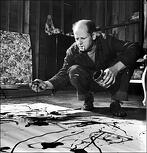
Now, let's say you have big-canvas talents. For example, let's say you're a Chuck Close or a Jackson Pollock.
You could certainly paint on a little 3x3 canvas, but you wouldn't have the space or capacity to express YOUR message in YOUR way.
You'd be constricted, small, and tight. You certainly would not be considered a master of modern art. You're working on the wrong canvas size - it's too small for you.
Or worse, you'll make a mess on the rug and the table as your paint spills over the edges. You need more space.
Are YOU working on a big enough canvas?
Are you SURE?
===
David Newman is a marketing speaker and marketing coach who works with professionals who want to do a better job of marketing so they get more leads, better prospects, and bigger sales.
Tags: marketing for speakers, marketing speaker, marketing success, small business coach, motivational speaker, marketing ideas, motivational speaker marketing, success tips, small business marketing, small business marketing speaker, success
"Nearly all rich and powerful people are not notably talented, educated, charming, or good-looking. They become rich and powerful by wanting to be rich and powerful."

-- Paul Arden
How’s that for a goal? Imagine this:
“Billy, what do you want to be when you grow up?”
Billy: “Rich and powerful!”
Isn’t that great? What is wrong with that answer?
Nothing, NOTHING, NOTHING! Or as my mother says, “There’s nothing wrong with making a lot of money, you know.” (Thanks, Mom.)
Paul Arden gets it. On the cover of his book It’s Not How Good You Are, It’s How Good You Want to Be, he has the subtitle “The world’s best-selling book by Paul Arden.”
That’s what we’re talking about!
===
David Newman is a marketing speaker and marketing coach who works with professionals who want to do a better job of marketing so they get more leads, better prospects, and bigger sales.
Tags: marketing for speakers, marketing speaker, marketing success, keynote speaker, marketing ideas, marketing coach, motivational speaker marketing, marketing tips
'Ideas are flowing much faster now than they ever used to.'

-- Pradeep Sindhu, Founder, Juniper Networks
This snippet from a FAST COMPANY interview got me thinking that one good metric for corporate innovation is fairly simple to measure: I call it IDEA FLOW.
Here's how to measure it - right now!
Answer these 8 questions:
1. How many ideas have come across your desk in the last 30 days from anywhere in your organization?
2. How quickly did you respond to them with either:
a. feedback
b. discussion
c. implementation
3. How many ideas did you personally contribute anywhere else in the organization?
4. How many got one of the three responses in question 2 above?
5. Where do most of the ideas that are ACTED UPON come from in your organization?
6. What formal or informal structures are in place to harvest, encourage, and reward business ideas - even crazy or offbeat ones?
7. Are managers rewarded for not only the ideas they come up with, but others' ideas that they credit, promote and implement?
8. What is the path of the typical IDEA FLOW in your organization? Are there many stops along the way or is there a streamlined process?
Do you remember the public TV cartoon on "How a Bill Becomes a Law?" - connect that to "How Do Ideas Become Profit?"
===
David Newman is a marketing speaker and marketing coach who works with professionals who want to do a better job of marketing so they get more leads, better prospects, and bigger sales.
Tags: marketing speaker, small business coach, marketing ideas, marketing coach, small business marketing
Guest column by Nick Usborne
The Rule of One falls into two areas...what you write about, and who you write to.
Here’s the first part of the rule...
Confine each communication to a single topic
This is a battle that has been raging between copywriters and their clients for a very long time.
Twenty years ago I remember trying to discourage clients from wanting to say too much in a single ad or direct mail letter.
I think they felt that if they were going to pay the media costs, they would get “more for their money” if they used every opportunity to say as much as possible about their products, services and company.
My counter-argument was that they would communicate much more clearly, and with better results, if they stuck to a single topic and a single message. The same problem persists today on the web.
Too many web pages try to cover too much ground.
Think of it this way. Very few people arrive at your site wanting to hear about all of your different products or services. Most will have used a search engine to find information on a single, clearly defined topic.
Whether you bring them to a specific landing page or some other interior page, build your pages so that they focus on just one topic at a time.
Do that and you will stay focused and please your visitors.
As a side benefit, you will also please the major search engines, which consistently reward pages that are confined to a single topic. The more clearly defined the page topic, the higher the listing.
And now for the second part of the Rule of One.
Write to one person at a time
You have probably heard this advice before. But as I read web pages across a variety of industries, I see little evidence of writers following this simple rule.
Basically, you will write more clearly, more personally and with better results if you picture an individual prospect or reader as you write.
Don’t write to some amorphous demographic group. Write to one person within that group.
Don’t create a mental picture of “that kind of person”. Picture a real person with a real life. Think about that person’s life. Think about what they want out of life.
Now think about how your product or service fits that person.
If you do this well, if you can truly see an individual prospect in your mind, it will have a profound impact on what and how you write.
Your text will read and feel as if it is being written to a real person. The corporate-speak jargon and biz-speak nonsense will disappear, and you will suddenly begin writing more clearly, with a true empathy for the person who will be reading your text.
Keep one thing in mind. This is not a “copywriting trick”. This is writing pages in a way that corresponds to how they will be read. It may sound obvious, but so many people lose touch with the fact that every page you write WILL be read by individuals with unique lives and needs.
No “group” will ever read your page. No “industry” will ever read your page.
The web pages you write will always be read by individuals, one at a time.
Concluding thoughts
Stick to one topic and write to one person.
It sounds easy, but very few people do it. Sometimes copywriters fail to write in this way because they haven’t thought about it. Sometimes it happens due to unrelenting pressure from above.
Either way, sticking to the Rule of One will always help you. Discipline yourself and fight your clients and managers if you need to.
In the end, the results will speak for themselves.
====
Note: Nick Usborne is the leading advocate of good writing on the Web. He is an
author, copywriter, consultant, speaker, and the publisher of the Excess Voice
newsletter for online writers. Read his articles at http://www.excessvoice.com
Tags: marketing for speakers, marketing speaker, marketing success, marketing for coaches, web marketing, writing, marketing ideas, marketing coach, small business marketing, small business marketing speaker
© 2025 Do It! Marketing | info@doitmarketing.com | Privacy